Best USB Port Blockers for Maximum Security
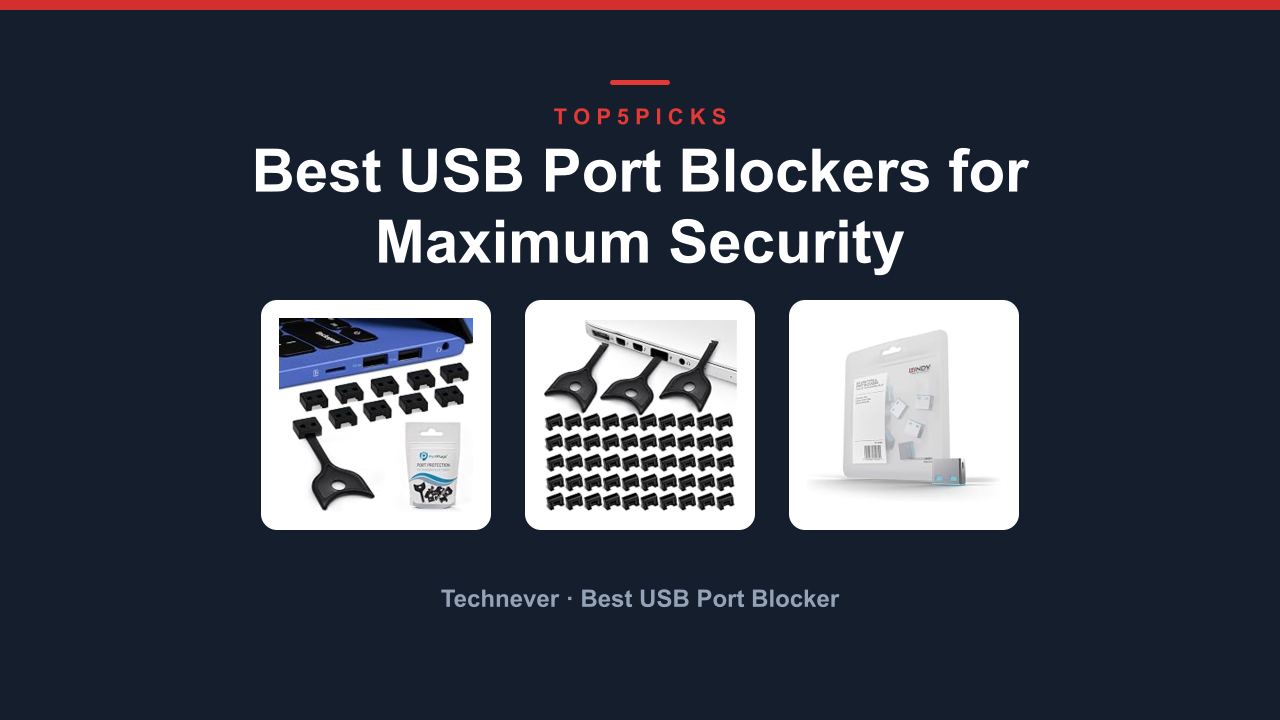
The best Best USB Port Blocker is the USB Port Blockers 10 Pack with a removal key, offering the ideal balance of security, ease of use, and value for most offices and home users. Its keyed locking mechanism physically prevents unauthorized USB access while still being removable when you need it.
Want a bigger bulk solution? The USB Port Blockers 50 Pack gives you 50 locks and three keys, perfect for large organizations or IT departments, as long as you don’t mind managing a single key type.
As an Amazon Associate, I earn from qualifying purchases.
This guide tells you what to look for in a USB port blocker, including build material, locking mechanism, and key count, so you don’t overpay for features you don’t need. It also covers who should skip these entirely (see the “Who Should NOT Buy” section).
Everything below is based on current Amazon product data, specifications, and verified buyer feedback, not hands-on lab testing.
Quick Answer: The Best USB Port Blocker
The best overall Best USB Port Blocker is the USB Port Blockers 10 Pack (with Removal Key), it offers the ideal mix of security and convenience for most users.
- USB Port Blockers 10 (B0C5KLB91V) (Best for general office & home): Perfect balance of security and convenience.
- USB Port Blockers 50 (B0DLWPKT2G) (Best for bulk deployment): 50 locks with 3 keys for large teams.
- Lindy USB Port Blocker (B000I2JWK4) (Best for brand consistency): Trusted Lindy quality in a vibrant blue.
- 12PCS USB Metal Port Lock Blocker (B0FH6MNRBK) (Best for durability): Metal construction for rugged environments.
- USB Port Blockers 10 (B0GW5TK3Q7) (Best for two-point locking): Extra security with zinc alloy locks.
Thinking about managing USB access in a shared workspace? Jump to Who Should NOT Buy below before you spend anything.
Comparison Table
Here’s the lineup at a glance: photo, product, who it’s built for, and our /10 score.
| Photo | Product | Best for | Score | Buy |
|---|---|---|---|---|
 | USB Port Blockers 10 | General office & home | 8.8/10 | Check price → |
 | USB Port Blockers 50 | Bulk deployment | 9.0/10 | Check price → |
 | Lindy USB Port Blocker | Brand reliability | 7.8/10 | Check price → |
 | 12PCS USB Metal Port Lock Blocker | Durability | 8.6/10 | Check price → |
 | USB Port Blockers 10 | Two-point locking | 8.7/10 | Check price → |
Scroll sideways on small screens to see every column.
USB Port Blockers 10: Best Overall for Offices and Home
USB Port Blockers 10: Best Overall for Offices and Home
USB Port Blockers 50: Best for Bulk Deployment
USB Port Blockers 50: Best for Bulk Deployment
Lindy USB Port Blocker: Best for Brand Reliability
Lindy USB Port Blocker: Best for Brand Reliability
12PCS USB Metal Port Lock Blocker: Best for Durability
12PCS USB Metal Port Lock Blocker: Best for Durability
USB Port Blockers 10: Best for Two-Point Locking
USB Port Blockers 10: Best for Two-Point Locking
Buying Guide: Lock Type, Material, Pack Size and Fit
What kind of locking mechanism do you actually need?
The core difference between these picks comes down to friction fit versus keyed lock. Friction-fit blockers like the Lindy USB Port Blocker stop dust and casual attempts, but anyone with pliers can remove them. Keyed locks, like the ones on the zinc alloy 10-pack or the standard 10-pack, require a physical key to release internal prongs.
That's a meaningful step up if you're protecting machines in a shared workspace.
For most home offices, a keyed plastic blocker is the sweet spot. For public-facing terminals, go metal. Ask yourself one question: is this stopping dust or stopping people?
The answer changes the price you should pay.
Plastic, metal, or zinc alloy?
Plastic blockers are light, cheap, and fine for desks that only you touch. The downside is that a strong twist can crack them. Metal and zinc alloy bodies survive more abuse, and they feel more secure when installed.
Our metal 12-pack pick also handles dust and moisture better, which helps in garages or workshop PCs. Just remember that heavier materials add weight, and not every laptop port has the depth for a bulky alloy lock.
How many blockers and keys does your setup need?
Pack sizes here range from a 10-pack all the way to a 50-pack. A single desktop with two or three spare USB-A ports only needs a handful. An office with twenty workstations should look at the 50-pack, which also includes three keys so multiple IT staff can manage the fleet.
Key count matters more than you'd think: one key means one point of failure, while three keys mean you can share access without duplicating anything.
Will they fit your ports?
All five picks are designed for standard USB-A ports. That covers most desktop PCs, older laptops, monitors, and many keyboards. They won't fit USB-C, Micro-USB, or Mini-USB.
If your devices are all newer with only USB-C, this whole category is the wrong tool. Check the physical depth of the port too: ultra-thin laptops sometimes have shallow ports where a two-point lock won't seat fully. When in doubt, measure the port opening before ordering a bulk pack.
For more on how to secure the rest of your digital workflow, take a look at our guide to keeping AI workflows private.
Who Should NOT Buy Best USB Port Blocker
USB port blockers are the wrong purchase for a few specific buyer profiles. Here's who they are, and what to look at instead.
You Need Software-Based USB Control
If your goal is logging every USB device that connects, or blocking specific devices while allowing approved ones, a physical blocker is too blunt. Windows Group Policy, macOS configuration profiles, and third-party endpoint security tools give you remote control, audit logs, and whitelisting. Physical locks can't tell a trusted flash drive from a rogue one.
If you're already managing computers across a network, software enforcement will save you far more headaches than shoving plastic into a hundred ports.
You're Protecting Device With Only USB-C Ports
Modern laptops from Apple, Dell, and Lenovo increasingly ship with nothing but USB-C or Thunderbolt ports. None of the blockers in this roundup fit those. For USB-C, you'd need a different category entirely: keyed USB-C locks or laptop cable locks.
Buying a USB-A blocker for a USB-C-only machine is a straight waste of money. Check your devices before you order.
You Need Permanent, Tamper-Proof Removal
A motivated person with the right tools can remove any of these blockers. If your threat model includes someone who will pry, drill, or cut, no consumer USB port blocker will stop them. In that case, look at epoxy-filled ports, locked enclosures, or managed USB hubs with physical keys.
Those are industrial-grade solutions, and they cost accordingly. For everyday threats, any keyed option above is enough.
Final Verdict
Start with the USB Port Blockers 10 Pack. It gives you keyed security, a sensible pack size, and a price that fits most budgets. For a single office or home setup, it's the most balanced choice on this list.
Need to secure an entire company? The 50-pack is the obvious upgrade, with three keys that let your IT team share access without a single point of failure. It costs more upfront, but the per-unit value is hard to ignore.
Working in a rougher environment? The metal 12-pack will shrug off more abuse, and the two-point zinc alloy set offers the strongest resistance to casual tampering. If your needs don't fit any of these, check the Who Should NOT Buy section above and pick the right tool for your actual problem, not the first blocker you see.
FAQ
What's the best USB Port Blocker overall?
The USB Port Blockers 10 Pack is the best overall pick. It balances a keyed locking mechanism, a practical 10-pack count, and broad compatibility with standard USB-A ports at a reasonable price.
Do USB port blockers damage my ports?
No, not when installed correctly. They insert into the port like a normal USB plug and lock in place without applying sideways pressure. The two-point zinc alloy model does require a firm push, so it's worth testing on one port first if you have a very shallow laptop port.
Can someone remove a USB port blocker without a key?
Most keyed blockers are difficult to remove without the key, but not impossible. A strong grip with pliers can sometimes break plastic shells, and a drill will defeat anything in this category. That's why metal and zinc alloy options exist for higher-security environments.
What is a USB port blocker used for?
A USB port blocker physically prevents inserting USB devices into a port. Organizations use them to stop data theft, prevent malware-laden drives from being plugged in, and keep dust and moisture out of unused ports on sensitive equipment.
Do USB port blockers work on USB-C ports?
No, each blocker in this roundup is built for USB-A ports only. For USB-C ports, you'd need a dedicated USB-C port lock or a different access-control approach, such as software-based USB device restrictions.

Similar Posts