Best PCIe Slot Testers: Top Models for Accurate Results
Senior Hardware Systems Specialist & Tech Repair Editor
The best Best Pcie Slot Tester is the PC Motherboard PSU Power Supply Tester, the only one here that gives you a complete starter kit for diagnosing not just PCIe slots but also your PSU, motherboard, and more. It’s the go-to choice for anyone who wants a single toolset to troubleshoot a non-booting system.
If you only need a dedicated PCIe slot tester, the PCI-E 16X 8X PCI Express Slot is a more focused option. It won’t test your power supply or give you the carrying case, but it’s simple and direct.
As an Amazon Associate, I earn from qualifying purchases.
This guide will help you decide which one fits your needs, and also tell you who should skip this category entirely. If you’re looking for deep lane-level diagnostics or something that tests every PCIe variation, you’ll want to check the “Who Should NOT Buy” section first.
Everything here comes from current Amazon product data, specs, and each product’s owner track record, not from hands-on lab testing.
Quick Answer: The Best Pcie Slot Tester
The PC Motherboard PSU Power Supply Tester is the best overall pick for most PC troubleshooting needs. Here’s the full lineup ranked:
- PC Motherboard PSU Power Supply Tester (Best Comprehensive Starter Kit): Covers PSU, motherboard, PCIe, and more in one carrying case.
- PCI-E 16X 8X PCI Express Slot (Best Dedicated PCIe Slot Tester): Simple LED indicators for shorts and opens on 16X/8X slots.
Thinking about buying a PCIe slot tester for a dead system or a non-standard slot? Jump to Who Should NOT Buy below before you spend anything.
Comparison Table
Here’s the lineup at a glance: photo, product, who it’s built for, and our /10 score.
| Photo | Product | Best for | Score | Buy |
|---|---|---|---|---|
 | PC Motherboard PSU Power Supply Tester | Comprehensive Starter Kit | 8.5/10 | Check price → |
 | PCI-E 16X 8X PCI Express Slot | Dedicated PCIe Slot Tester | 7.8/10 | Check price → |
Scroll sideways on small screens to see every column.
PC Motherboard PSU Power Supply Tester: Best Overall Starter Kit for PC Diagnostics
PCI-E 16X 8X PCI Express Slot: Best Dedicated PCIe Slot Tester
Buying Guide: What to Look for in a PCIe Slot Tester
What Kind of Diagnostics Do You Need?
The first question to ask yourself is whether you're chasing a dead system or just a flaky slot. If your PC won't power on at all, a dedicated PCIe slot tester won't help you. You need a tool that checks the power supply, motherboard power rails, and startup signals.
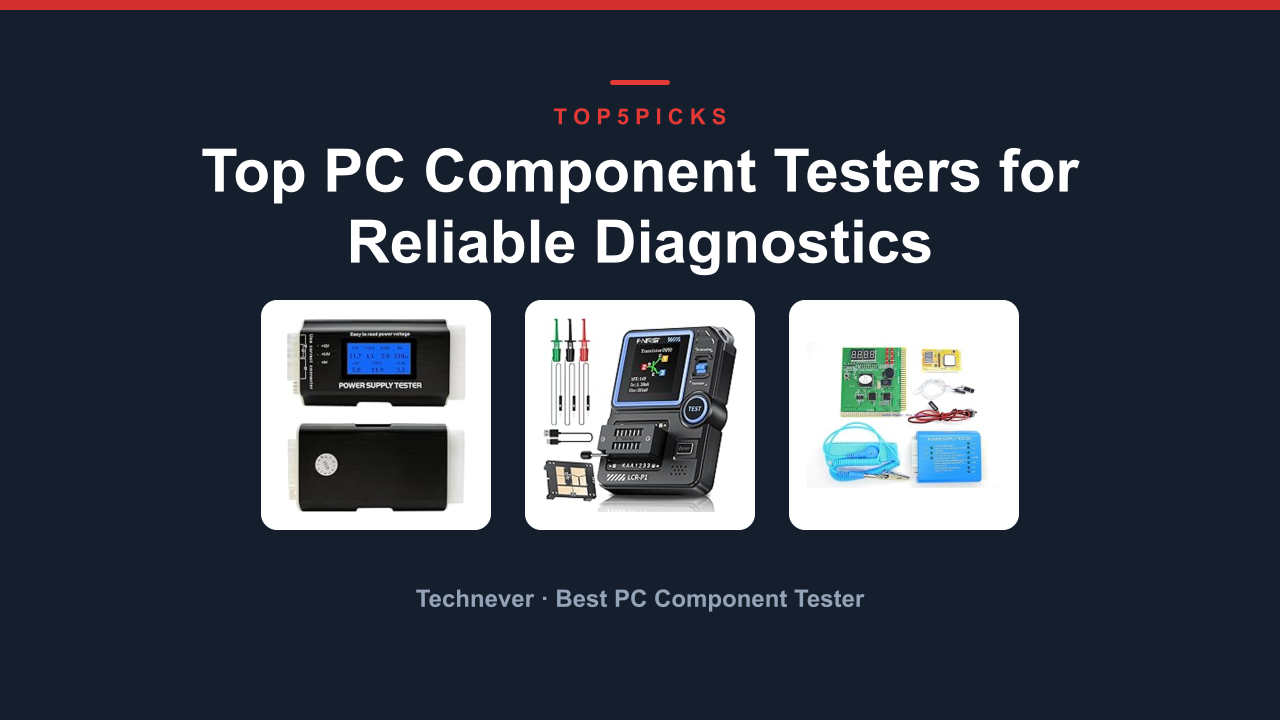
The PC Motherboard PSU Power Supply Tester is designed for that broader job. It includes a 20/24-pin tester, a 4-pin/8-pin CPU tester, and a SATA/Molex tester, plus a PCIe test card for slot checks. Aggregate user reviews confirm that it's the most versatile option for quick system-level troubleshooting.
If you've already verified that your PSU and motherboard are fine and you suspect the PCIe slot itself, then the dedicated PCI-E 16X 8X PCI Express Slot is a simpler, cheaper choice. It won't tell you about voltages, but it will tell you if the slot has a short or an open circuit.
PCIe Slot Specificity vs. Full System Testing
The dedicated tester only works with PCIe 16X and 8X slots. If your motherboard has PCIe 4X or 1X slots (common on lower-end boards or for M.2 adapters), this tester won't fit. The starter kit's PCIe test card is also limited to 16X/8X, but it's only one part of a larger set.
If you need to test a variety of slot sizes, neither of these picks is ideal. You'd need a more advanced tool like a PCIe logic analyzer, but those are expensive and overkill for most users.
Also, consider the PCIe generation. Both testers are designed for standard PCIe Gen 1 through Gen 4 slots. They don't specifically test for Gen 5 signal integrity.
For most current systems, that's fine. If you're troubleshooting a high-end Gen 5 GPU or SSD, these testers will still check for shorts and opens but won't report lane speed or signal quality.
Ease of Use and Included Accessories
The starter kit requires a bit of learning: you need to understand the post codes and voltage readings. The dedicated tester is plug-and-play: LEDs light up in a pattern to indicate good or bad. Many users find the kit's instructions lacking, but once you get the hang of it, the LED display is clear.
The dedicated tester has no manual to speak of, but it's so simple you don't need one.
If you work in a repair shop, the carrying case and ESD strap in the starter kit are nice bonuses. The dedicated tester is just a bare card, so you'll need to store it carefully.
Budget Considerations
Both tools are budget-friendly compared to professional diagnostic equipment. The starter kit is a better value because it replaces several separate testers. The dedicated PCIe tester is cheaper but does only one thing.
If you only need to check a slot once, the dedicated tester is fine. If you plan to do regular PC repairs, the starter kit will save you time and money in the long run.
Who Should NOT Buy a PCIe Slot Tester
This category is the wrong purchase for two kinds of buyers. Here's who they are, and what to look at instead.
You Need to Diagnose a Dead System
If your PC won't power on, a PCIe slot tester won't tell you why. You need a power supply tester or a multimeter to check PSU voltages. The starter kit includes a PSU tester, so it's acceptable for that job.
But if you only buy the dedicated PCIe slot tester, you'll be stuck. Instead, consider a standalone PSU tester or a full motherboard diagnostic card. The PC Motherboard PSU Power Supply Tester is the closest you can get to an all-in-one.
You Need to Test PCIe 1X or 4X Slots
Neither of these picks works with PCIe 1X or 4X slots. If you're troubleshooting a network card, sound card, or M.2 adapter that uses those smaller slots, these testers are useless. You'd need a PCIe 1X slot tester or a universal continuity tester with a probe set.
Consider a simple multimeter instead, which can check continuity on any slot if you have the pinout diagram.
Final Verdict
The PC Motherboard PSU Power Supply Tester is our top pick because it covers the most ground. It's the only PCIe slot tester here that also tests your PSU, motherboard, and other components, all in a handy carrying case. For most DIYers and repair technicians, it's the best value.
If you already know the slot is the problem and you just want to confirm it, the PCI-E 16X 8X PCI Express Slot is a fine, low-cost alternative. It's simple, it works, and it's small enough to stash in a drawer.
Need to test smaller slots or diagnose a completely dead system? The buying guide and "Who Should NOT Buy" section above will point you in the right direction.
FAQ
What's the best PCIe slot tester overall?
The PC Motherboard PSU Power Supply Tester is the best overall because it's a comprehensive starter kit that includes PCIe testing along with PSU and motherboard diagnostics. It's the most versatile option for troubleshooting non-booting systems.
What does a PCIe slot tester do?
A PCIe slot tester plugs into a PCIe slot on your motherboard and checks for electrical shorts or open circuits. Some models also show voltage levels on the slot's power rails. The dedicated PCIe 16X/8X tester uses simple LEDs to indicate a short or open.
Is a PCIe slot tester worth it for home users?
If you've ever had a GPU that worked in one slot but not another, or if you buy used motherboards, a PCIe slot tester can save you hours of guesswork. For occasional use, the dedicated tester is affordable enough. For regular tinkering, the starter kit is a better investment.
Can a PCIe slot tester damage my motherboard?
No, as long as you insert it correctly (with the computer powered off and the PSU disconnected). These testers are passive or draw only a small amount of power from the slot's 3.3V rail. They are designed to be safe for standard ATX motherboards.
How do I use a PCIe slot tester?
Turn off your PC, unplug the power cord, and insert the tester into the PCIe slot. Reconnect the power and turn on the PC. The tester's LEDs or display will show the results.
For the dedicated tester, the LED pattern indicates good or faulty. For the starter kit, the 4-digit display shows post codes and voltages.
The PCI-E 16X 8X tester only uses LEDs; what do the LEDs mean?
The LED pattern is typically printed on the card itself. Usually, all LEDs lit means the slot is good. If any LEDs are off or dim, it indicates a short or open circuit on that specific pin.
The exact pattern may vary, so check the product description or a quick online search for the manual.

Similar Posts