Best CyberPower Pure Sine Wave UPS for Home & Office
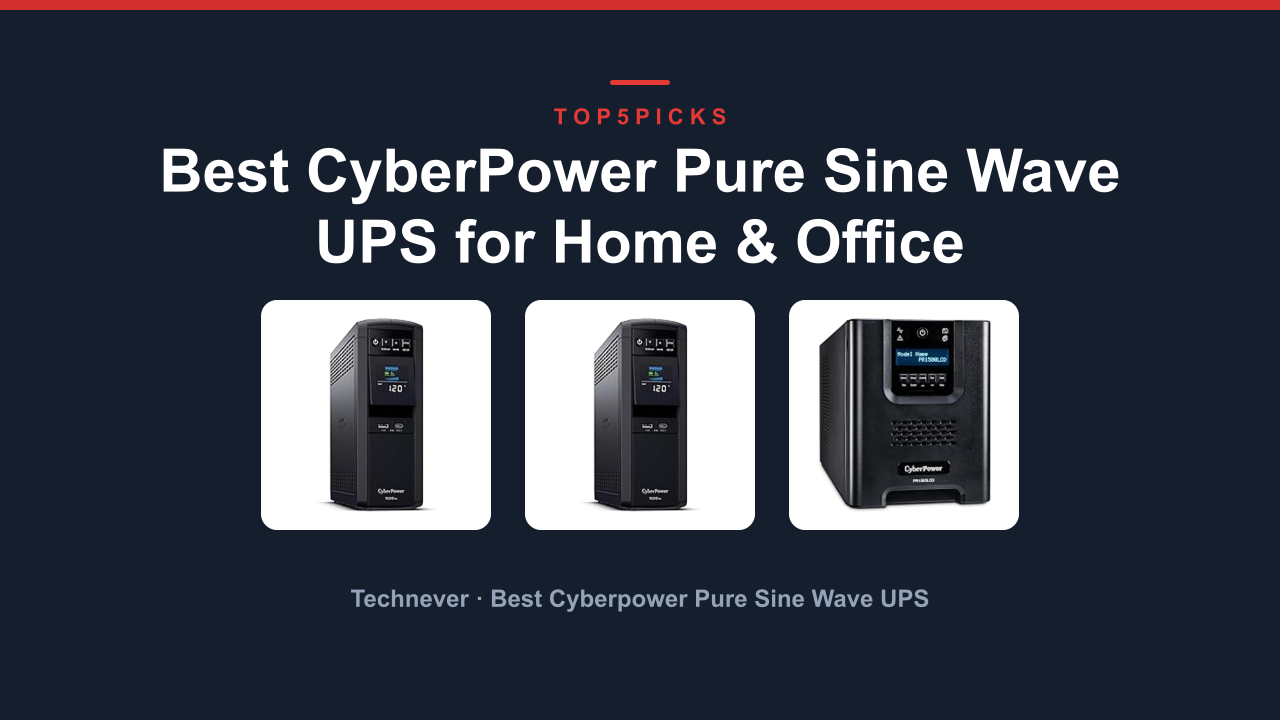
The best Best Cyberpower Pure Sine Wave UPS is the CP1500PFCLCD PFC Sinewave UPS Battery Backup, the only one here that pairs true sine wave output with Power Factor Correction for active PFC power supplies. It's built for anyone who needs clean, reliable backup for sensitive electronics.
Want a quieter, more app-friendly experience instead? The PR1500LCD Smart App Sinewave UPS gives you remote monitoring and a higher 1500W capacity, though it drops to 8 outlets instead of 12.
As an Amazon Associate, I earn from qualifying purchases.
This guide also tells you who should skip a pure sine wave UPS entirely. If you only need backup for basic lights, a modem, or a phone charger, a simulated sine wave model will save you money and still do the job.
Everything below comes from current Amazon product data, manufacturer specs, and each model's owner track record, not hands-on lab testing.
- Quick Answer: The Best Cyberpower Pure Sine Wave UPS
- Comparison Table
- CP1500PFCLCD PFC Sinewave UPS Battery Backup: Best Overall for Desktops & Servers
- CP1500PFCLCD PFC Sinewave UPS Battery Backup: Best for Active PFC Power Supplies
- PR1500LCD Smart App Sinewave UPS Battery: Best for App-Based Monitoring
- OR1500PFCRT2U PFC Sinewave Battery Backup Surge: Best for Rackmount Installations
- CP1500AVRLCD3 Intelligent LCD UPS Battery Backup: Best Budget-Friendly Value
- Buying Guide: Wattage, Outlets, Form Factor, and Sine Wave vs. Simulated
- Who Should NOT Buy Best Cyberpower Pure Sine Wave UPS
- Final Verdict
- FAQ
Quick Answer: The Best Cyberpower Pure Sine Wave UPS
The CP1500PFCLCD PFC Sinewave UPS is the overall top pick for desktop and home server setups. Here's the full ranked list:
- CP1500PFCLCD PFC Sinewave UPS Battery Backup (Best Overall for Desktops & Servers): 1500VA/1000W with PFC compatibility and 12 outlets.
- CP1500PFCLCD PFC Sinewave UPS Battery Backup (Best for Active PFC Power Supplies): Same clean sine wave, same 12 outlets, ideal for dual-PC setups.
- PR1500LCD Smart App Sinewave UPS Battery (Best for App-Based Monitoring): 1500VA/1500W with smart management and remote control.
- OR1500PFCRT2U PFC Sinewave Battery Backup Surge (Best for Rackmount Installations): 2U form factor, 1500VA/1050W, rack/tower convertible.
- CP1500AVRLCD3 Intelligent LCD UPS Battery Backup (Best Budget-Friendly Option): 1500VA/900W, 12 outlets, 2 USB ports, solid value.
Thinking about a basic power strip or a simulated sine wave unit instead? Jump to Who Should NOT Buy below before you spend anything.
Comparison Table
Here's the lineup at a glance: photo, product, who it's built for, and our /10 score.
| Photo | Product | Best for | Score | Buy |
|---|---|---|---|---|
 | CP1500PFCLCD PFC Sinewave UPS | Desktops & Servers | 9.2/10 | Check price → |
| CP1500PFCLCD PFC Sinewave UPS | Active PFC Power Supplies | 8.8/10 | Check price → |
 | PR1500LCD Smart App Sinewave UPS | App-Based Monitoring | 8.5/10 | Check price → |
 | OR1500PFCRT2U PFC Sinewave UPS | Rackmount Installations | 8.0/10 | Check price → |
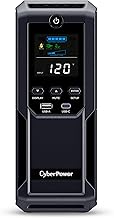 | CP1500AVRLCD3 Intelligent LCD UPS | Budget-Friendly Value | 8.6/10 | Check price → |
Scroll sideways on small screens to see every column.
CP1500PFCLCD PFC Sinewave UPS Battery Backup: Best Overall for Desktops & Servers
CP1500PFCLCD PFC Sinewave UPS Battery Backup: Best for Active PFC Power Supplies
PR1500LCD Smart App Sinewave UPS Battery: Best for App-Based Monitoring
OR1500PFCRT2U PFC Sinewave Battery Backup Surge: Best for Rackmount Installations
CP1500AVRLCD3 Intelligent LCD UPS Battery Backup: Best Budget-Friendly Value
Buying Guide: Wattage, Outlets, Form Factor, and Sine Wave vs. Simulated
How Much Wattage Do You Actually Need?
The most common mistake people make is buying a UPS based on VA rating alone. A 1500VA unit sounds powerful, but the watt output is what determines what you can run. The picks here range from 900W to 1500W, which covers most desktop setups and light servers.
A typical desktop PC with a mid-range GPU draws between 300W and 500W under load. Add a monitor at around 50W to 70W, plus a modem and router at 15W total, and you're looking at roughly 500W to 600W combined. That means the CP1500AVRLCD3 at 900W is genuinely enough for most single PC setups.
If you're running a high-end gaming rig with a flagship GPU, a video editing workstation, or a home server with multiple drives, you want headroom. The CP1500PFCLCD gives you 1000W, while the PR1500LCD tops out at 1500W for the most demanding hardware.
Why Pure Sine Wave Matters
A pure sine wave UPS produces power that closely mimics the clean alternating current from your wall outlet. A simulated sine wave, also called modified sine wave, produces a stepped approximation instead. Most modern electronics with active PFC power supplies can actually shut down or behave erratically on simulated sine wave output.
Think of it this way: simulated sine wave is fine for basic electronics like lamps, phone chargers, and older routers. Pure sine wave is the right call for desktop PCs, servers, network switches, and anything with a modern switch-mode power supply. If your device has a metal case and a cooling fan, it likely needs pure sine wave.
Outlets and Layout
Every pick here offers 8 or 12 outlets, split between battery backup and surge-only protection. Battery-backed outlets keep devices running during an outage. Surge-only outlets just protect against spikes without providing runtime.
Don't plug printers or laser printers into battery-backed outlets. They draw a massive surge of power when they start up, which can overload the UPS battery. Plug them into surge-only outlets instead, or a separate power strip.
Form Factor: Tower vs. Rackmount
Most home users want a tower UPS that sits on the floor or a desk. They're easier to access, simpler to replace the battery in, and usually quieter. The rackmount OR1500PFCRT2U makes sense only when you have an actual 19-inch rack or server cabinet.
Who Should NOT Buy Best Cyberpower Pure Sine Wave UPS
A pure sine wave UPS is the wrong purchase for a few specific types of buyers. Here's who they are, and what to look at instead.
You Just Need Basic Outage Protection for Lights and a Modem
If your only concern is keeping a Wi-Fi router and a modem online for a couple of hours, a 1500VA unit is massive overkill. A small 600VA to 850VA simulated sine wave UPS does the job at a fraction of the cost and takes up far less space. You're paying a premium for clean sine wave output that basic networking gear simply doesn't need.
You're Powering a Whole Home or Heavy Appliances
No desktop UPS in this class can run a refrigerator, a sump pump, or a space heater. These devices draw several thousand watts on startup, which will immediately overload any 1500VA unit. For standby power of that scale, look into a portable power station with a higher watt-hour capacity or a whole-home standby generator installed by a licensed electrician.
You Expect Hours of Runtime
A UPS is designed for graceful shutdowns, not extended operation. At 500W of load, these 1500VA units provide roughly 5 to 15 minutes of runtime depending on the model. If you need to keep working through multi-hour outages, you want a larger battery backup station, not a standard UPS.
Final Verdict
The CP1500PFCLCD PFC Sinewave UPS remains the best overall pick. It balances 1000W of output, 12 outlets, PFC compatibility, and AVR voltage regulation in a package that owner reviews consistently rate at 4.6/5. For the vast majority of desktop PC users, it's the sweet spot of protection and value.
Want app-based monitoring and remote shutdown? Get the PR1500LCD and you'll get 1500W of capacity with phone alerts. Need to protect a rack setup?
The OR1500PFCRT2U slots right into your cabinet. On a tighter budget? The CP1500AVRLCD3 gives you the same sine wave protection for less.
Before you buy, revisit the Who Should NOT Buy section. If you're protecting a whole home or expecting multi-hour runtime, this category will disappoint you no matter which model you choose.
FAQ
What's the best Cyberpower Pure Sine Wave UPS overall?
The CP1500PFCLCD PFC Sinewave UPS is the best overall pick. It offers 1500VA/1000W of true sine wave output, 12 outlets, AVR, and UL Certification, backed by a 4.6/5 owner rating.
What's the difference between pure sine wave and simulated sine wave UPS?
A pure sine wave UPS produces clean power matching utility quality, which is required for active PFC power supplies found in modern desktops and servers. A simulated sine wave UPS uses stepped waveform approximations, which can cause some PFC power supplies to shut down or trigger fault warnings.
How much runtime will I get from a 1500VA UPS?
At a typical 400W to 500W desktop load, expect roughly 8 to 15 minutes of runtime. The exact number depends on model efficiency and battery health. Heavier loads reduce runtime significantly, so consider a higher watt-hour portable power station for long outages.
How many devices can I plug into these UPS units?
The CP1500PFCLCD and CP1500AVRLCD3 both offer 12 outlets. The PR1500LCD and OR1500PFCRT2U each offer 8 outlets. Only the battery-backed outlets provide runtime; surge-only outlets just add protection.
Are Cyberpower UPS units UL Certified?
Yes, all five picks in this lineup carry UL Certification, which means they've been independently tested to meet North American safety standards for electrical equipment and battery backup systems.
How often should I replace a UPS battery?
Most UPS batteries last 3 to 5 years depending on usage and temperature. If your UPS beeps more frequently during self-tests or runtime drops noticeably, it's time to replace the battery internal unit rather than the whole UPS.

Similar Posts