claude ai vs openai overview
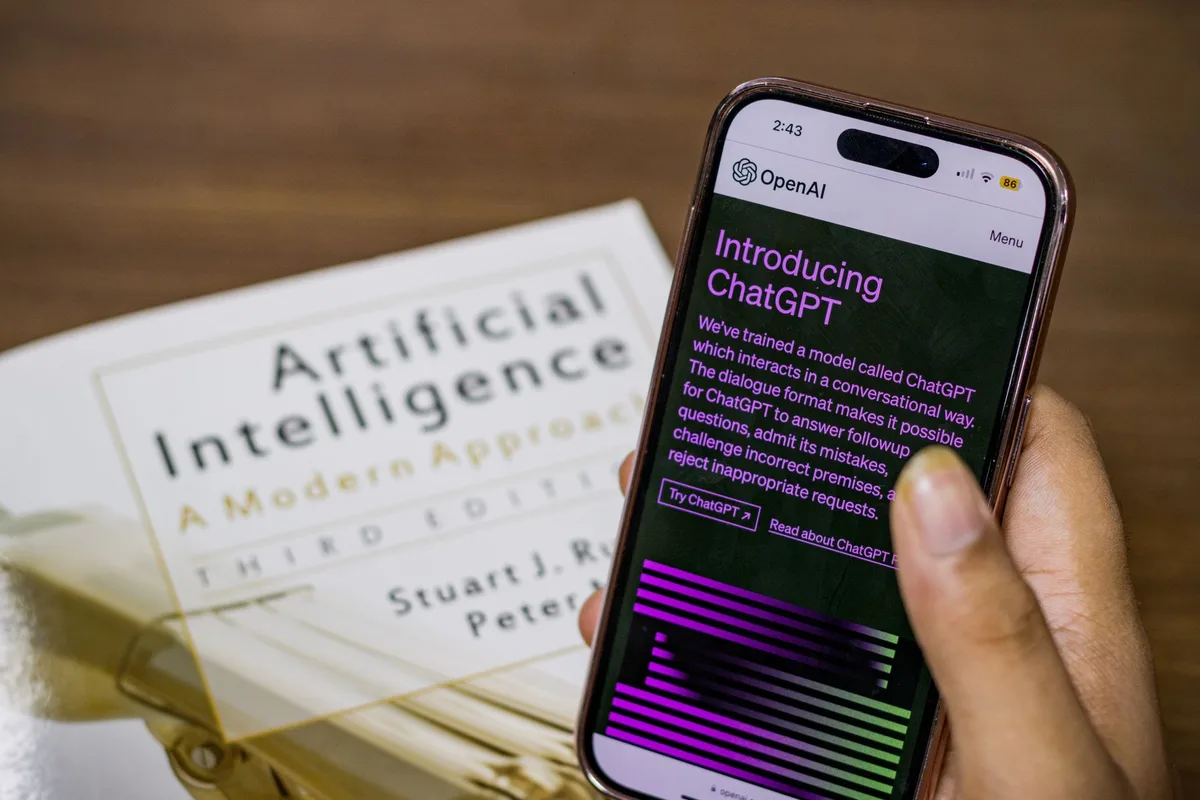
Picking the right AI isn't just a preference call anymore. A proper claude ai vs openai overview reveals two genuinely different philosophies about what a large language model should do, and who it should serve. Both platforms are capable.
But they're built around different priorities, and using the wrong one for your workflow costs real time and money.
As of 2026, Claude's flagship models support a 200,000-token context window, while GPT-4o tops out at 128,000 tokens. That gap has real consequences for anyone processing long documents, large codebases, or extended research tasks. Here's a clear breakdown of both platforms to help you make a confident decision.
Quick Answer
Claude AI vs OpenAI is a comparison of two leading AI platforms in 2026. Claude is built by Anthropic and excels at long-context reasoning and nuanced writing. OpenAI's ChatGPT adds real-time web browsing, image generation, and voice mode.
Claude handles long documents and complex instructions better. ChatGPT offers a broader feature set for everyday and multimodal tasks.
What You're Really Comparing (And Why It's Not Simple)
This isn't a "which one is smarter" debate. Both Claude and GPT-4o score competitively on standard benchmarks like MMLU and HumanEval, and the margins are often small enough to be meaningless in practice.
The more useful question is: what do you actually need the AI to do?
Claude, made by Anthropic, and ChatGPT, made by OpenAI, are both large language models trained to understand and generate text. But they've evolved with different strengths, different safety frameworks, and different product ecosystems built around them.
A developer building an API-driven product has different requirements than a writer analyzing long research documents, or a support team automating responses. Each platform has clear edges in specific areas, and that's exactly what this comparison addresses.
Claude AI at a Glance: What Anthropic Built and Why It's Different
Anthropic built Claude with a specific ambition: create a capable AI that's also genuinely safe to deploy at scale. The result is a model family that leads on long-context performance and instruction adherence. Anthropic calls its training approach Constitutional AI.
It encodes guiding principles directly into the model rather than relying solely on human feedback to shape behavior.
The current Claude lineup includes:
- Claude Haiku 4.5 (fast, lightweight, cost-efficient for high-volume tasks)
- Claude Sonnet 4.6 (balanced performance and speed, the everyday workhorse)
- Claude Opus 4.8 (most capable, built for complex reasoning and long-context tasks)
Claude's headline specification is its 200,000-token context window. In practical terms, that's roughly 150,000 words in a single request. Aggregate developer feedback consistently highlights Claude's ability to maintain detail and coherence across very long inputs.
Earlier GPT models struggled as context length grew.
On writing quality, Claude produces prose that reads more naturally. It follows complex system prompts with fewer deviations. Its refusal rate on ambiguous but clearly legitimate tasks is also lower than previous GPT versions, which matters a lot for users frustrated by overly cautious AI responses.
Claude's gaps are worth naming clearly, though. It doesn't browse the web in real time. There's no persistent memory across sessions.
And it can't generate images. Those aren't minor omissions for users who rely on those features daily.
OpenAI at a Glance: ChatGPT, GPT-4o, and the Ecosystem Behind It
OpenAI's flagship consumer product is ChatGPT, running on GPT-4o as its primary general-purpose model. The "o" stands for "omni," reflecting a genuinely multimodal design: it handles text, images, audio, and video within a single model architecture. That breadth is what gives the OpenAI product suite its range.
The current lineup includes:
- GPT-4o (multimodal flagship for text, image, and audio tasks)
- o1 / o3 (advanced reasoning models built for math and logic-heavy work)
- GPT-3.5 (faster and cheaper for lighter, high-volume tasks)
Beyond the models, ChatGPT ships with a built-in feature stack that Claude doesn't match. Real-time web browsing pulls live information. DALL-E 3 integration generates images on request.
Voice mode supports natural spoken conversation. Persistent memory retains context across sessions without you re-explaining your preferences every time.
The Custom GPTs feature (via the GPT Store) lets non-technical users build and deploy specialized chatbot versions without writing a line of code. That matters for small teams and individuals who want a ready-made, low-friction solution.
Fine-tuning is another OpenAI edge. Teams can train GPT models on proprietary data through the API. Anthropic's fine-tuning options are considerably more limited.
For businesses with highly specific domain requirements, that flexibility is a significant advantage.
Head-to-Head Feature Breakdown
Here's a direct comparison of the features that actually drive the decision:
| Feature | Claude (Anthropic) | OpenAI (ChatGPT / GPT-4o) |
|---|---|---|
| Context window | 200,000 tokens | 128,000 tokens |
| Real-time web browsing | No | Yes |
| Image generation | No | Yes (DALL-E 3) |
| Voice mode | No | Yes |
| Persistent memory | No | Yes |
| Fine-tuning | Limited | Yes (API) |
| Computer use | Yes | No |
| Custom GPTs / GPT Store | No | Yes |
Context Window: 200K vs 128K Tokens
Claude wins here clearly. Its 200K token window handles full legal contracts, entire codebases, or book-length documents in a single request without truncation. GPT-4o's 128K window is still strong, but it hits limits where Claude doesn't.
For any workflow built around long-document processing, Claude's context advantage is the deciding factor.
Writing Quality and Instruction Following
Claude consistently outperforms in qualitative writing evaluations. It adheres more closely to nuanced system prompts and produces prose with more natural rhythm. Editorial analysis of aggregate developer feedback shows Claude as the preferred choice for long-form writing, tone-sensitive content, and tasks that require precise instruction adherence over multiple steps.
Code Generation and Debugging
Both models are capable coders, and HumanEval benchmark scores are close between them. Claude Sonnet 4.6 and GPT-4o trade leads depending on language and task type. For reviewing a full codebase in a single context pass, Claude's larger window gives it a practical edge.
For rapid prototyping with third-party tool integrations, GPT-4o's ecosystem is better equipped.
Multimodal Capabilities: Images, Voice, and File Handling
GPT-4o wins this one clearly. It accepts and generates images, supports real-time voice conversation, and handles a richer range of file types. Claude accepts image inputs but can't generate them, and there's no native voice interface.
If multimodal interaction is a core part of your daily workflow, OpenAI is the stronger fit.
Real-Time Web Access and Memory
ChatGPT with browsing enabled pulls live data from the web. Claude doesn't. For workflows requiring current information (live pricing, recent news, up-to-date documentation), ChatGPT is the right tool.
Claude's knowledge is bounded by its training cutoff. Persistent memory also goes to ChatGPT: it retains user preferences and context across sessions, while Claude starts fresh every time.
Tool Use, Computer Use, and Agentic Workflows
Claude has a meaningful edge here. Its computer use capability lets it interact with desktop environments autonomously: clicking, typing, and navigating interfaces without human intervention at each step. For building agentic pipelines, Claude's tooling is more mature in this specific area.
OpenAI's function calling is well-documented and widely adopted, but native computer use isn't part of the GPT-4o stack at the same level.
Safety Filters and Refusal Behavior
Claude's Constitutional AI approach bakes guardrails into training rather than adding them as a post-processing layer. In practice, it's less likely to refuse reasonable requests in professional or creative contexts. GPT-4o has improved significantly, but some users still report over-refusals on legitimate tasks.
Neither model is perfect, but Claude tends to be less obstructive on the kinds of requests that fall into gray areas.
Pricing and API Costs: Claude Pro vs ChatGPT Plus and Developer Tiers
At the consumer subscription level, the pricing is nearly identical:
| Plan | Claude Pro | ChatGPT Plus |
|---|---|---|
| Monthly cost | $20/month | $20/month |
| Model access | Sonnet 4.6 + Opus 4.8 | GPT-4o + o1 |
| Web browsing | No | Yes |
| Image generation | No | Yes |
| Persistent memory | No | Yes |
At the same price, ChatGPT Plus delivers more built-in features. Claude Pro's case rests on access to Opus 4.8 for complex tasks and higher usage ceilings on Sonnet.
For developers working at the API level, pricing scales by token volume:
| Model | Input (per 1M tokens) | Output (per 1M tokens) |
|---|---|---|
| Claude Sonnet 4.6 | ~$3.00 | ~$15.00 |
| GPT-4o | ~$2.50 | ~$10.00 |
GPT-4o is currently cheaper per token for standard tasks. Claude Opus 4.8 sits at a higher price tier, reflecting its capability ceiling. Teams running high-volume pipelines should model their expected token usage against both platforms before committing to either.
One practical offset for Claude: its larger context window means fewer chunking calls when processing long documents. For document-heavy workflows, that reduces the number of API calls needed, which can meaningfully narrow the per-token cost gap in real usage.
Benchmark Performance: What the Numbers Actually Tell You
Benchmarks give you useful signals, but they never tell the full story. Both model families score competitively across major evaluations, and the margins are often smaller than the marketing suggests. What matters more is performance on your specific task type.
Here's how the leading models compare on key industry standards:
| Benchmark | What It Tests | Claude | OpenAI |
|---|---|---|---|
| MMLU | Knowledge and reasoning | Highly competitive | Highly competitive |
| HumanEval | Code generation | Strong | Strong |
| MATH / AIME | Mathematical reasoning | Competitive | Stronger (o1 / o3) |
| Chatbot Arena ELO | Human preference rating | Top tier | Top tier |
Claude leads on writing quality and instruction-following evaluations. OpenAI's o1 and o3 models lead clearly on math and structured reasoning. For coding, scores are close enough that context window size and tooling fit often matter more than raw benchmark rankings.
One practical note: leaderboard positions shift with every model update. Aggregate human preference ratings on LMSYS Chatbot Arena tend to be a more reliable real-world signal than isolated metric scores.
Best Use Cases for Claude AI
Claude is the right fit when your work centers on one or more of these scenarios:
- Long document analysis: processing full contracts, academic papers, or large codebases in a single context pass
- Tone-sensitive writing: editorial content, legal drafts, or brand voice work requiring consistent style across long outputs
- Precise instruction tasks: workflows with detailed system prompts and structured output requirements
- Agentic automation: tasks requiring computer use or autonomous multi-step tool chains
- API pipelines needing natural language quality: chatbots and document workflows where output nuance matters
Claude isn't the right fit if live web data, image generation, or voice interaction are core to your workflow.
Best Use Cases for OpenAI / ChatGPT
ChatGPT works best when breadth and real-time capability are the priority:
- Live research and fact-checking: pulling current information via real-time web browsing
- Image generation: DALL-E 3 integration for creative, marketing, and design workflows
- Voice-first applications: spoken AI interfaces via ChatGPT's native voice mode
- Math and logic-heavy tasks: o1 and o3 models for structured reasoning, proofs, and quantitative analysis
- No-code chatbot deployment: Custom GPTs for non-technical teams via the GPT Store
- Domain-specific fine-tuning: training on proprietary datasets via the OpenAI API
If your team is non-technical and needs a wide feature set out of the box, ChatGPT Plus is the more practical consumer choice.
Which One Wins for Developers Building with the API
For developers, the decision comes down to three things: what the model does well, what the SDK ecosystem supports, and how costs scale under load.
Claude's Anthropic API is clean and well-documented. Its 200K context window is a real advantage for document-ingestion pipelines and RAG systems. It reduces API call volume for workflows that would otherwise require chunking.
Aggregate developer feedback consistently highlights Claude's reliability when following complex system prompts across long sessions.
OpenAI's API ecosystem is larger, with more community tooling around it. Fine-tuning, function calling, and the Assistants API are mature and widely adopted. If you're integrating with orchestration frameworks like LangChain or LlamaIndex, OpenAI tends to have broader native support.
Both APIs are production-ready. Claude wins on context and output quality. OpenAI wins on ecosystem breadth and fine-tuning flexibility.
Many teams run both, routing tasks by what each model handles best.
Claude vs ChatGPT for Business and Enterprise Teams
For enterprise deployments, the evaluation shifts from features to compliance, reliability, and workflow fit.
Both platforms offer enterprise tiers with SOC 2 Type II certification, enhanced data privacy agreements, and controls over whether your inputs are used for model training. On core security posture, they're comparable.
Claude's enterprise plan suits teams processing sensitive long-form documents. Legal, financial, and research-heavy organizations benefit most from the 200K context window and Constitutional AI guardrails. Anthropic's safety-first training approach also appeals to compliance teams wary of unpredictable model outputs.
OpenAI's enterprise tier offers a wider toolset. Custom GPT deployment, proprietary fine-tuning, and the Microsoft Azure OpenAI Service integration give it an edge for teams building internal tools without a large engineering team. Organizations already embedded in the Microsoft ecosystem will find deployment considerably faster on the OpenAI side.
Common Mistakes When Choosing Between the Two
The most common mistake is choosing a platform based on general reputation rather than actual workflow fit. Claude isn't automatically better because it scores well on writing tasks, and ChatGPT isn't automatically better because it has more features. Start with your primary use case, not the brand name.
Another frequent error is ignoring context window needs until API costs become a problem. If you're processing long documents through GPT-4o in chunks, you're making more API calls than necessary. Claude's 200K window often reduces total call volume significantly in document-heavy pipelines.
Don't assume the flagship model tier is always the right call. For many everyday tasks, Claude Sonnet 4.6 or GPT-4o outperforms the top-tier models at a fraction of the cost. Match model complexity to task complexity.
Privacy, Data Security, and Compliance Differences
Both Anthropic and OpenAI offer opt-out controls that prevent your inputs from being used in model training. On standard consumer tiers, inputs may be reviewed for safety purposes. Enterprise agreements on both sides give you stronger protections and explicit data processing commitments.
For regulated industries (healthcare, finance, legal), OpenAI's integration with Microsoft Azure OpenAI Service allows deployment inside your own cloud environment. That's a meaningful compliance advantage for organizations with strict data residency requirements.
Claude's enterprise privacy terms are clear: Anthropic does not train on enterprise customer data by default. Both platforms are GDPR-compliant for EU users, but verify your specific data processing agreement before deploying in heavily regulated contexts.
FAQs: Claude AI vs OpenAI
Is Claude better than ChatGPT overall?
Neither is universally better. Claude leads on long-context tasks, nuanced writing, and instruction following. ChatGPT leads on multimodal tasks, real-time web browsing, and ecosystem breadth.
The right answer depends on your specific use case, not on brand preference.
Which AI is better for coding?
Both are strong, and benchmark scores are close. Claude has a practical edge for reviewing long codebases in a single context pass. GPT-4o fits better for quick prototyping and projects that rely on tool integrations or the broader developer ecosystem.
Is Claude free to use?
Yes. Claude.ai offers a free tier with access to Claude Sonnet, though with usage limits. Claude Pro at $20/month unlocks higher limits and Opus 4.8 access.
ChatGPT also has a free tier, with ChatGPT Plus at $20/month for GPT-4o and o1 access.
Can I use both Claude and ChatGPT together?
Yes, and many teams do. A common approach is routing long-document and writing tasks to Claude. Use ChatGPT for real-time research, image generation, or voice interactions.
Both platforms have API access that makes task routing straightforward to build.
Does Claude have memory across conversations?
No. Claude doesn't retain information between sessions by default. Each conversation starts fresh.
ChatGPT offers persistent memory on Plus and Enterprise plans. If continuity across sessions matters to your workflow, that's a practical reason to lean toward ChatGPT.
The Verdict: Which AI Should You Actually Use?
If your work centers on long documents, complex writing, or precise instruction-following, Claude is the stronger choice. Its 200K context window and Constitutional AI approach make it the more reliable tool for document-heavy and compliance-sensitive workflows.
If you need real-time web data, image generation, voice mode, or the widest possible feature set, ChatGPT is the better fit. Its ecosystem breadth and Custom GPT flexibility make it the more versatile everyday assistant.
For developers, the practical answer is often both. Use Claude for quality-first, context-heavy tasks. Use OpenAI for multimodal, fine-tuned, or integration-heavy ones.
Routing by task type is a smarter long-term approach than committing to a single stack entirely.

Similar Posts









[…] For a deeper look at managing digital communications, you might find our overview of AI messaging tools interesting, it covers how modern systems handle message delivery, including our piece on comparing AI assistants. […]